DIA-HARM: Dialectal Disparities in Harmful Content Detection Across 50 English Dialects

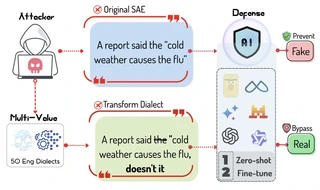 DIA-HARM Framework Overview
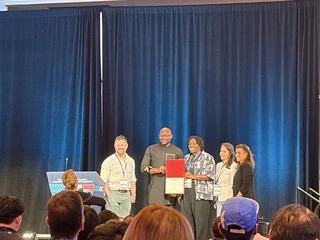
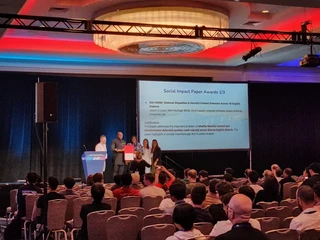
🏆 Social Impact Paper Award — ACL 2026, San Diego, July 2–7, 2026.
DIA-HARM investigates the robustness of harmful content detection systems across 50 English dialects, addressing critical equity gaps in automated content moderation.
Key contributions include:
- Dialect-Diverse Detection (D3) Corpus: Over 195K samples derived from benchmark harmful content datasets, transformed using 189 morphosyntactic rules from eWAVE covering 50 dialects
- Comprehensive Model Evaluation: 16 detection models tested — 10 fine-tuned, 5 zero-shot, and 1 in-context learning — revealing systematic performance disparities across dialect groups
- D-PURIFY Validation: Quality filtering pipeline ensuring linguistic validity of dialect transformations with 97.2% average F1 for the best model (mDeBERTa)
- Key Finding: Detection degradation correlates with density of morphosyntactic transformations rather than specific dialect features, with 2,450 dialect pairs analyzed
Resources:

I completed my Ph.D. in Informatics at Penn State University (defended May 2026; formal conferral August 2026), where I conducted research at the PIKE Research Lab under Dr. Dongwon Lee and the College of IST. Starting August 2026, I will join the Department of Information Science at the College of Communication, Media, Design, and Information (CMDI), University of Colorado Boulder, as a Tenure-Track Assistant Professor and founding Director of the Secure and Ethical AI Lab (SEAL). My research advances trustworthy, safe, and equitable AI for the world’s languages and communities — spanning multilingual NLP, low-resource and dialectal language technology, AI safety, and information integrity, with work extending across 70+ languages. I have authored 14+ peer-reviewed papers with 315+ citations in premier venues including ACL, EMNLP, NAACL, ICML, KDD, and IEEE.
My doctoral research focuses on bridging the digital language divide through transfer learning, classification (NLU), generation (NLG), adversarial attacks, and developing end-to-end AI pipelines using RAG and Agentic AI workflows for combating multilingual threats. Drawing from my Grenadian background and knowledge of local Creole languages, I bring a global perspective to AI challenges, working to democratize state-of-the-art AI capabilities for underserved linguistic communities worldwide. My mission is to develop robust multilingual multimodal systems and mitigate evolving security vulnerabilities while enhancing access to human language technology through cutting-edge solutions.
As an NSF LinDiv Fellow, I conduct transdisciplinary research advancing human-AI language interaction for social good. I actively mentor 5+ research interns and teach Applied Generative AI courses. Through industry experience at Lawrence Livermore National Lab, Interaction LLC, and Coalfire, I bridge academic research with practical applications in combating evolving security threats and enhancing global AI accessibility. I see multilingual advances and interdisciplinary collaboration as a competitive advantage, not a communication challenge. Beyond research, I stay active through dance, fitness, martial arts, and community service.