Lost in Speech: Trilingual Spoken Hallucination Detection Across Audio and Transcripts
Trilingual spoken hallucination detection, comparing what is detectable from raw audio against what survives transcription.
meruyert-aristombayeva
Trilingual spoken hallucination detection, comparing what is detectable from raw audio against what survives transcription.
A benchmark for over-refusal in large audio language models — how often they decline pseudo-harmful but benign spoken queries, and what drives it.
A position paper arguing that the dual curse of multilingual AI — 35% harmful generation and near-random reward-model accuracy in low-resource languages — cannot be fixed by …

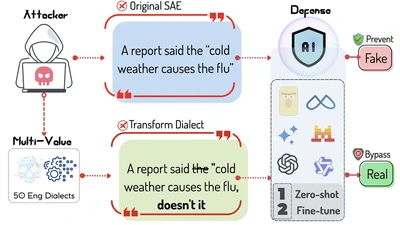
DIA-HARM evaluates 16 harmful content detection models across 50 English dialects using 195K+ samples, revealing 1.4–3.6% F1 drops for fine-tuned models and up to 27% for zero-shot …
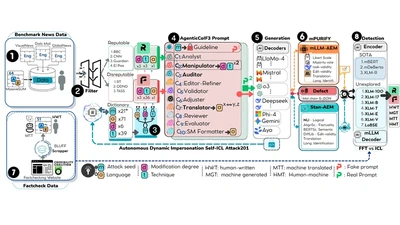
BLUFF is the largest multilingual fake news detection benchmark, spanning 79 languages with 202K+ samples. It introduces AXL-CoI for adversarial generation and mPURIFY for quality …
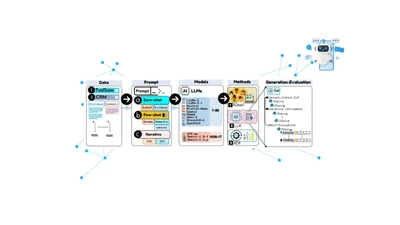
Chain-of-Interactions (CoI) introduces a novel multi-step framework that leverages LLMs' in-context learning capabilities for abstractive task-oriented dialogue summarization. …
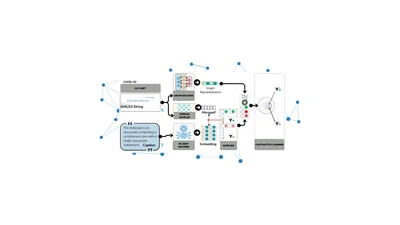
GAMIC introduces a novel self-supervised learning approach for molecular in-context learning that combines graph neural networks with Morgan fingerprints to better capture …
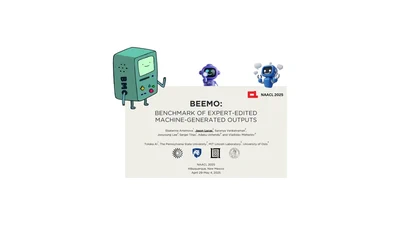
Beemo introduces a novel benchmark featuring 6.5k expert-edited machine-generated texts across diverse domains from creative writing to summarization. Through comprehensive …

This work introduces semantic captioning for SQL queries, addressing the reverse operation of semantic parsing by translating SQL code into natural language explanations. Using …
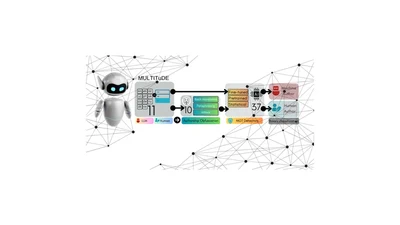
This research from Penn State and KiNiT, benchmarks the effectiveness of 10 authorship obfuscation (AO) techniques against 37 machine-generated text (MGT) detection methods across …