Presented at the 6th Pan African Proffessional Alliance Conference Proceedings

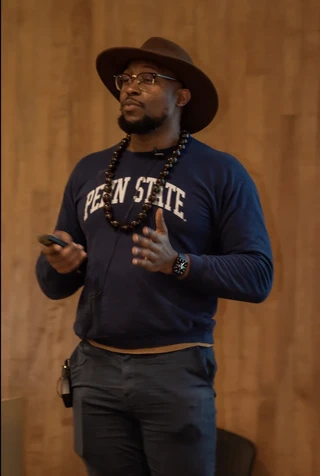 Image credit: Limeng Cui
Penn State University
University Park, Pennsylvania
Slides can be added in a few ways:
- Create slides using Hugo Blox Builder’s Slides feature and link using
slidesparameter in the front matter of the talk file - Upload an existing slide deck to
static/and link usingurl_slidesparameter in the front matter of the talk file - Embed your slides (e.g. Google Slides) or presentation video on this page using shortcodes.
Further event details, including page elements such as image galleries, can be added to the body of this page.

I am a PhD candidate in Informatics in the College of IST at Penn State University, where I conduct research at the PIKE Research Lab under the guidance of Dr. Dongwon Lee. I specialize in AI/ML research focused on Information Integrity, Safe and Ethical AI, including combating harmful content across multiple languages and modalities. My research spans low-resource multilingual NLP, generative AI, and adversarial machine learning, with work extending across 79 languages. I have published 12 papers with 260+ citations in premier venues including ACL, EMNLP, IEEE, and NAACL.
My doctoral research focuses on bridging the digital language divide through transfer learning, classification (NLU), generation (NLG), adversarial attacks, and developing end-to-end AI pipelines using RAG and Agentic AI workflows for combating multilingual threats. Drawing from my Grenadian background and knowledge of local Creole languages, I bring a global perspective to AI challenges, working to democratize state-of-the-art AI capabilities for underserved linguistic communities worldwide. My mission is to develop robust multilingual multimodal systems and mitigate evolving security vulnerabilities while enhancing access to human language technology through cutting-edge solutions.
As an NSF LinDiv Fellow, I conduct transdisciplinary research advancing human-AI language interaction for social good. I actively mentor 5+ research interns and teach Applied Generative AI courses. Through industry experience at Lawrence Livermore National Lab, Interaction LLC, and Coalfire, I bridge academic research with practical applications in combating evolving security threats and enhancing global AI accessibility. I see multilingual advances and interdisciplinary collaboration as a competitive advantage, not a communication challenge. Beyond research, I stay active through dance, fitness, martial arts, and community service.