Lost in Speech: Trilingual Spoken Hallucination Detection Across Audio and Transcripts
Trilingual spoken hallucination detection, comparing what is detectable from raw audio against what survives transcription.
meruyert-aristombayeva
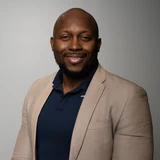
I completed my Ph.D. in Informatics at Penn State University (defended May 2026; formal conferral August 2026), where I conducted research at the PIKE Research Lab under Dr. Dongwon Lee and the College of IST. Starting August 2026, I will join the Department of Information Science at the College of Communication, Media, Design, and Information (CMDI), University of Colorado Boulder, as a Tenure-Track Assistant Professor and founding Director of the Secure and Ethical AI Lab (SEAL). My research advances trustworthy, safe, and equitable AI for the world’s languages and communities — spanning multilingual NLP, low-resource and dialectal language technology, AI safety, and information integrity, with work extending across 70+ languages. I have authored 14+ peer-reviewed papers with 427+ citations in premier venues including ACL, EMNLP, NAACL, ICML, KDD, and IEEE.
My doctoral research focuses on bridging the digital language divide through transfer learning, classification (NLU), generation (NLG), adversarial attacks, and developing end-to-end AI pipelines using RAG and Agentic AI workflows for combating multilingual threats. Drawing from my Grenadian background and knowledge of local Creole languages, I bring a global perspective to AI challenges, working to democratize state-of-the-art AI capabilities for underserved linguistic communities worldwide. My mission is to develop robust multilingual multimodal systems and mitigate evolving security vulnerabilities while enhancing access to human language technology through cutting-edge solutions.
As an NSF LinDiv Fellow, I conduct transdisciplinary research advancing human-AI language interaction for social good. I actively mentor 5+ research interns and teach Applied Generative AI courses. Through industry experience at Lawrence Livermore National Lab, Interaction LLC, and Coalfire, I bridge academic research with practical applications in combating evolving security threats and enhancing global AI accessibility. I see multilingual advances and interdisciplinary collaboration as a competitive advantage, not a communication challenge. Beyond research, I stay active through dance, fitness, martial arts, and community service.
Trilingual spoken hallucination detection, comparing what is detectable from raw audio against what survives transcription.
A benchmark for over-refusal in large audio language models — how often they decline pseudo-harmful but benign spoken queries, and what drives it.
A hybrid Bayesian Belief Network and Artificial Neural Network approach for predicting Sustainable Development Goal outcomes from country-level AI readiness indicators, pairing …
A position paper arguing that the dual curse of multilingual AI — 35% harmful generation and near-random reward-model accuracy in low-resource languages — cannot be fixed by …


Invitation-only seminar on "From Speech Translation to Multilingual Communication – New Research Challenges" bringing together researchers from speech translation, interpretation …
Pedagogy, the T·I·C framework, and course portfolio at CU Boulder.
Vision, research questions, and the SEAL research program at CU Boulder.
Mentoring philosophy and SEAL's lab culture at CU Boulder.
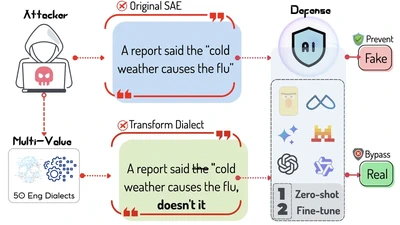
DIA-HARM evaluates 16 harmful content detection models across 50 English dialects using 195K+ samples, revealing 1.4–3.6% F1 drops for fine-tuned models and up to 27% for zero-shot …

Invited Lunch & Learn session exploring responsible, transparent, and ethical uses of AI in research and teaching, with emphasis on upholding academic integrity and maintaining …